
Oral & Dental Surgery
Oral Cyst Surgery
Save a copy or print this leaflet to read at home.
WHAT IS A CYST?
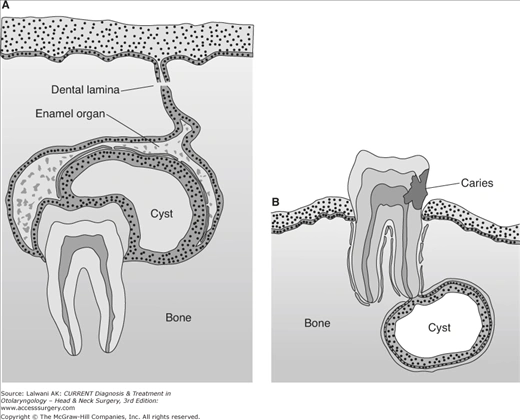
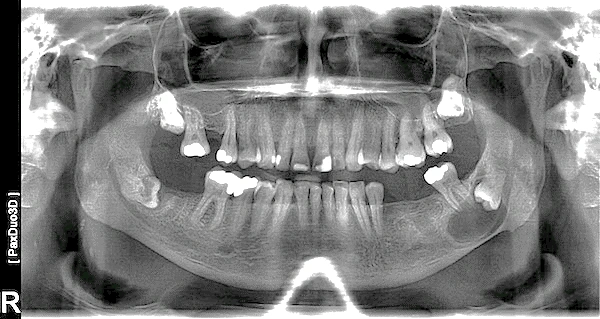
A cyst is a fluid filled sac. They commonly occur in the jaws associated with teeth. Cysts don’t always give symptoms, some will be discovered incidentally on routine x-rays.
If a cyst is left untreated it will gradually increase in size over time (like a balloon slowly filling with water) this can cause it to resorb or expand the surrounding bone of the jaw, it may tip or displace teeth and if gets very large there can be a risk of jaw fracture.
TREATMENT
There are many different types of cysts, but most are benign and can be simply ‘shelled out’ (enucleated). Some will require further treatment. If associated with a tooth, that tooth may also need to be extracted.
All cysts will be sent to the pathology lab and examined under a microscope to determine the cyst type. This is called the histopathology.
If the cyst is very large or involves multiple teeth it may need to be reduced (marsupialised) before removal. This involves taking a sample for testing and placing a drain between your mouth and the cavity. Your surgeon will show you how to flush this each day and over time, generally months, it will gradually reduce in size until it is small enough to be removed.
Usually a repeat x-ray will be taken around six months to check bone has filled in the defect.
POSSIBLE COMPLICATIONS OF ORAL CYST SURGERY
Surgical procedures are not without their risks. Although we will go the lengths to minimise risks, complications may still occur. The following are some possible complications that can occur:
- Postoperative Pain and Swelling It is common to experience pain and swelling. It is also common to have discomfort when opening your mouth following your oral surgery. The pain in your mouth may trigger clenching and grinding at night in your sleep, causing jaw joint pain. This may take several days to resolve. If jaw joint pain is ongoing following complete healing of your surgical site, contact your surgeon.
- Weak jaw The jaw can become temporarily weakened following removal of some jaw cysts depending on its size. In rare cases, the jaw may break or fracture during surgery or within months following the surgery. For this reason a soft diet will often be recommended following surgery. If this occurs, we will discuss treatment.
- Numbness or altered sensation There are nerves that the cyst may be close to which when removed may become bruised. As a result, pain, numbness, tingling and loss of feeling to the teeth, gums, cheeks, lips, chin, tongue and upper or lower jaw may occur. If this occurs it is likely to be temporary and expected to resolve within eight weeks (although in some cases six to eighteen months). In rare cases this may be permanent.
- Infection With any surgical intervention there is a risk for infection. You may have been given a pre-operative dose or course of antibiotics to prevent infection. Please ensure you follow the instructions and complete the full course. Not every patient will require post-operative antibiotics.
SEDATION
Most oral cysts are removed in the operating theatre in our rooms using sedation.
POST OPERATIVE INSTRUCTIONS
Remember that a clean and healthy mouth heals more rapidly than a neglected one. Smoking may delay or complicate healing.
Clean your teeth as normal after surgery, being gentle around the site of the operation.
The following steps will help prevent bleeding and relieve soreness:
- REST – Rest for a few hours immediately following treatment and avoid strenuous exercise.
- RINSING – Do not rinse your mouth until the following day. Then for 1 week, rinse your mouth gently after meals using a mouthwash made by dissolving ½ teaspoon of salt in a glass of warm water. Hold the solution in your mouth for 2 minutes and then discard. Avoid over vigorous rinsing.
- FOOD – Avoid HOT food and fluids, and alcohol for the first day. Choose cool drinks and soft foods, this may be required for the next few days for comfort. Following this, due to the increase risk of a fractured jaw, please eat nothing chewier than mashed potatoes for the first six weeks following surgery. Avoid sucking or interfering with the wound.
- BLEEDING – Extraction sockets often ooze blood for up to 8 hours. To help control bleeding, sit upright or rest with the head and shoulders raised. Pressure can be applied to the bleeding area by biting firmly on a gauze pad or clean handkerchief for 15 minutes. Repeat as necessary.
- PAIN – Any pain or soreness can be relieved by taking a pain relieving preparation prescribed by your surgeon. Use any medicines prescribed or supplied according to directions. Teeth next to the operative site may ache for a short time.
- SUTURES – Dissolving stitches (sutures) are routinely placed. These usually loosen and fall out between 5-10 days.
- NUMBNESS – There will be some numbness around the operated area from the local anaesthetic injections for up to 10 hours. Care should be taken with eating and drinking, to avoid damaging the lips while they are numb.
- SWELLING – There may be significant swelling the next day. This usually resolves after 3 days. If there is swelling over the jaw muscles, it can cause a limitation of mouth opening for up to 1 week.
A follow up appointment, if required, will be made on the day of surgery.
If excessive bleeding, undue pain or other symptoms occur, during office hours contact the surgery without delay.
Emergency contact numbers are as follows:
John Bridgman (021) 767 421 Abi Estelle (021) 429 045 Nabeela Ahmed (029) 0203 4431 Brenton Wilson (020) 4134 3529