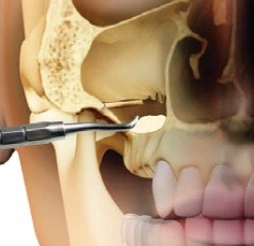
Dental Implants & Bone Grafting
Bone Grafting
Save a copy or print this leaflet to read at home.
WHAT IS A DENTAL BONE GRAFT?
Bone grafting is a surgical procedure that adds or restores bone in your jaw, usually to correct a structural defect to allow for future implant placement or prevent bone loss following tooth extraction.
WHY IS IT NEEDED?
When teeth are missing, the jawbone naturally shrinks over time because it is no longer stimulated by chewing. Some people also lose bone due to gum disease, trauma or infection. Without enough bone, dental implants cannot be placed.
HOW DOES IT WORK?
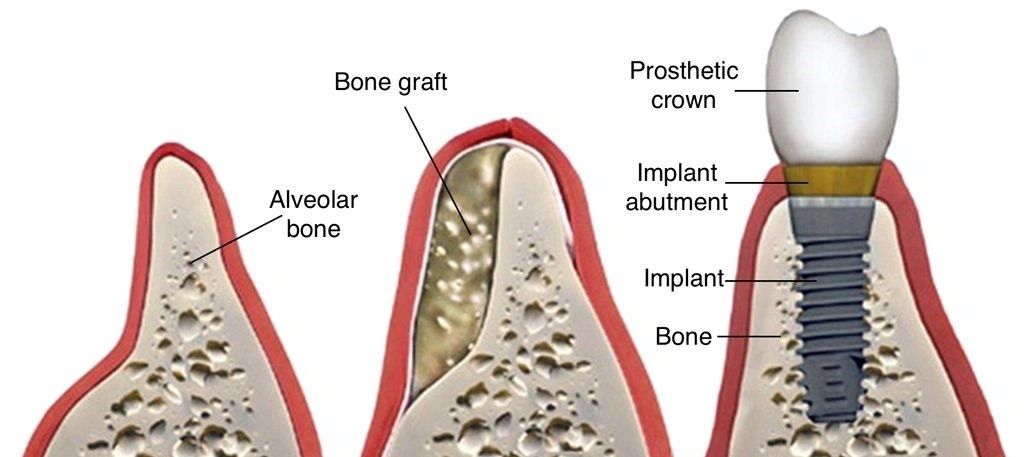
A surgeon places grafting material in the area where bone is thin which can improve bone height (vertical) or width (horizontal). The graft material acts like a scaffold that your body gradually replaces with new natural bone.
WILL I REQUIRE A BONE GRAFT?
For an implant to be fully supported, the bone must have sufficient volume in all three dimensions: height, width and depth. Sometimes only one dimension needs to be augmented with bone, while in other cases all three dimensions may require bone augmentation. Often the need for a bone graft is known before surgery, but sometimes it is a decision your surgeon will make during the procedure. For this reason, your surgical consent will usually include the potential use of bone products. If you have any questions, or if you prefer not to have certain products used, please let your surgeon know.
COMPLICATIONS AND RISKS OF BONE GRAFTING:
- Infection: Though uncommon, infection can occur and may require antibiotics or a further procedure.
- Failure of graft to take: Occasionally, the graft may not successfully integrate with the existing bone and may need to be replaced.
- Resorption: Some graft material may naturally resorb over time, which can slightly reduce the final bone volume.
TYPES OF BONE GRAFT MATERIALS:
- Autograft: Your own bone taken during the procedure.
- Allograft: A common type of bone graft taken from a cadaveric donor and then processed.
- Xenograft: Bone from animal source – usually pig or cow. The structure of animal bone is characteristically similar to human bone, it can therefore be used as alternative to autologous bone.
Both allograft and xenograft go through an extensive cleaning and sterilisation process in a highly controlled processing environment, countering the risk of disease transmission, making them safe for use.
PRECAUTIONS AFTER SURGERY:
Swelling is a normal part of the healing process, as blood flow to the area increases initially. It typically peaks around three days after the procedure and then gradually subsides. Applying a cold compress can help to reduce discomfort. You will also be prescribed suitable pain relief. For the first two weeks, salt water or antibacterial mouth washes are recommended to reduce the risk of infection. Smoking, vaping and poor oral hygiene can negatively affect bone graft healing. It is also important to not have continuous pressure in the area, such as a denture or plate with a large flange. Please note If you are a regular blood donor, this will need to be declared prior to future blood donations.
RIDGE AUGMENTATION
SINUS LIFT GRAFTING