
Dental Implants & Bone Grafting
Dental Implants
Save a copy or print this leaflet to read at home.
DENTAL IMPLANTS AND THEIR USES
A dental implant is a titanium screw placed in the jawbone to replace the root of a missing tooth. Titanium is biocompatible and is the same material commonly used for joint replacements.
Dental implants can be used to replace a single tooth, support a row of joined or bridged teeth, or be fitted with an attachment to help retain a removable denture. The implant screw contains an internal thread that allows various components to be attached.
It takes approximately four months for the bone to grow onto the implant surface, a process known as osseointegration. During this integration period, there are several options for what can be placed on top of the implant.
However, there are often limits on how much load the implant can be under until the osseointegration bond is strong enough to support the intended restoration. As a result, a temporary restorative solution is often required during the healing phase.
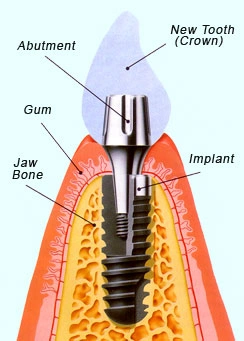
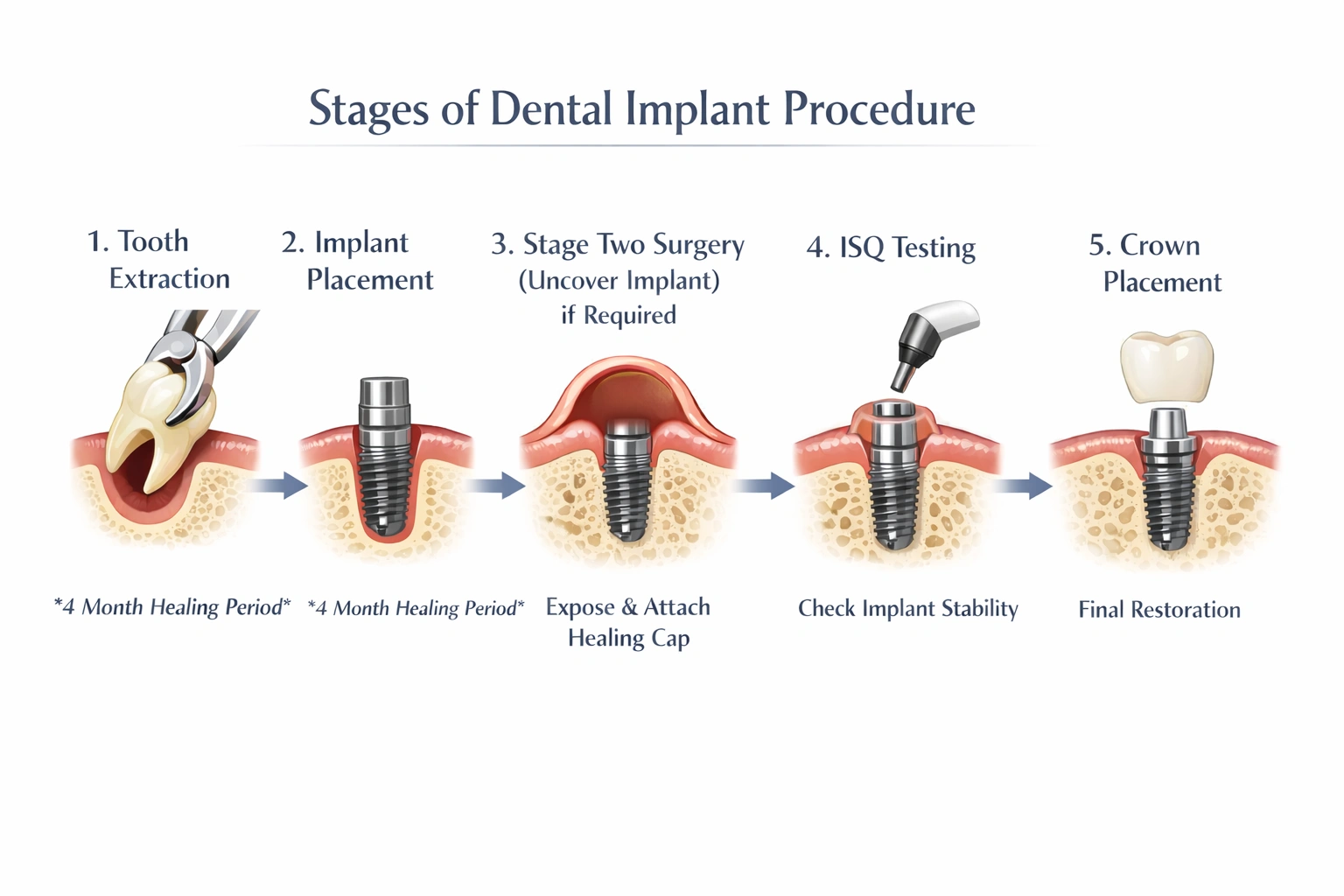
At approximately four months, you will return for assessment of your implant. This involves measuring the implant stability using an ISQ (Implant Stability Quotient). In most cases, a reading of 67 or greater indicates that the implant is stable enough to be loaded.
At this stage, your final restoration can be placed. This may be completed by your own dentist, or you can be referred to our specialist prosthodontist colleagues, Dr Andrew Newsom and Dr Lin Tee, at a neighbouring clinic.
WHAT IF THE TOOTH IS STILL THERE?
Sometimes it is possible to extract a tooth and place an implant at the same appointment. This depends on the absence of infection and the amount of available bone. These factors can be partly assessed during your consultation using X-rays or a CBCT (3D scan); however, the final decision is made at the time of surgery. If implant placement requires delay, this is usually a four to six month waiting period.
WILL I NEED A BONE GRAFT?
All patients are consented for the possible use of a bone graft, as this is often a clinical judgment made at the time of surgery. Bone grafting is commonly required when a tooth is extracted and an implant is placed immediately.
Bone grafting is often combined with PRF (platelet-rich fibrin), which is derived from your own blood. Refer to our additional Bone Graft and PRF information sheets for more details.
Please advise if you do not wish to receive any graft materials.
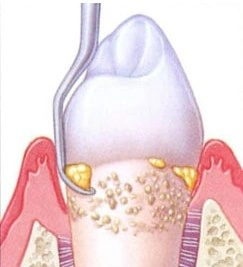
MAINTENANCE OF IMPLANTS
Bacteria in plaque and tartar (calculus) can develop around implants in the same way they do around natural teeth. Although implants cannot decay, the build-up of bacteria can cause infection of the gum and bone surrounding the implant. If left untreated, this may lead to gum loss around the implant and, in some cases, loss of the implant.
You will be shown how to care for your implant by the clinician who restores it. You should also have your implant checked by a clinician at least once per year
POSSIBLE COMPLICATIONS OF DENTAL IMPLANTS
SHORT-TERM COMPLICATIONS:
This may be influenced by surgical factors such as insufficient quantity or quality of bone, as well as challenges related to local anatomy, including the nasal floor, sinuses, nearby nerves, and adjacent teeth. Patients may also experience localised swelling or the development of a haematoma after surgery.
KNOWN RISK FACTORS:
The risk of implant failure is increased in the presence of poor bone quality, medical conditions that impair healing (such as poorly controlled diabetes or immunosuppression), reduced blood supply (including from smoking or vaping), and infection, with a slightly higher risk in patients with a penicillin allergy.
LONG-TERM COMPLICATIONS:
Long-term complications of dental implants include peri-implantitis (inflammation and infection around the implant), bone loss, and gum disease affecting the surrounding tissues. These conditions can compromise the stability and longevity of the implant if left untreated. The risk of developing these complications can be reduced with good oral hygiene and annual check-ups, which are strongly recommended.
POST OPERATIVE INSTRUCTIONS
Remember that a clean and healthy mouth heals more rapidly than a neglected one. Smoking may delay or complicate healing.
Clean your teeth as normal after surgery, being gentle around the site of the operation.
The following steps will help prevent bleeding and relieve soreness:
- REST – Rest for a few hours immediately following treatment and avoid strenuous exercise.
- RINSING – Do not rinse your mouth until the following day. Then for 1 week, rinse your mouth gently after meals using a mouthwash made by dissolving ½ teaspoon of salt in a glass of warm water. Hold the solution in your mouth for 2 minutes and then discard. Avoid over vigorous rinsing.
- FOOD – Avoid HOT food and fluids, alcohol and hard or chewy foods for the first day, then normal diet as tolerated. Choose cool drinks and minced or soft foods, this may be required for the next few days for comfort. Avoid sucking or interfering with the wound.
- BLEEDING – The operated area often oozes blood for up to 8 hours. To help control bleeding, sit upright or rest with the head and shoulders raised. Pressure can be applied to the bleeding area by biting firmly on a gauze pad or clean handkerchief for 15 minutes. Repeat as necessary.
- PAIN – Any pain or soreness can be relieved by taking a pain relieving preparation prescribed by your surgeon. Use any medicines prescribed or supplied according to directions. Teeth next to the operative site may ache for a short time.
- SUTURES – Dissolving stitches (sutures) are routinely placed. These usually loosen and fall out between 5-10 days.
- NUMBNESS – There will be some numbness around the operated area from the local anaesthetic injections for up to 10 hours. Care should be taken with eating and drinking, to avoid damaging the lips while they are numb.
- SWELLING – There may be significant swelling the next day. This usually resolves after 3 days. If there is swelling over the jaw muscles, it can cause a limitation of mouth opening for up to 1 week.
A follow up appointment, if required, will be made on the day of surgery.
If excessive bleeding, undue pain or other symptoms occur, during office hours contact the surgery without delay.
Emergency contact numbers are as follows:
John Bridgman (021) 767 421 Abi Estelle (021) 429 045 Nabeela Ahmed (029) 0203 4431 Brenton Wilson (020) 4134 3529