
Dental Implants & Bone Grafting
Dental Implant Options
Save a copy or print this leaflet to read at home.
OPTIONS FOR TOOTH REPLACEMENT
Although dental implants are now often considered the best form of tooth replacement, there are still many options after the loss of a tooth. The ultimate decision needs to take into account the overall health of your mouth and remaining teeth, your preferences and the cost. It is best to decide in consultation with your regular dentist. The implant surgery, to place the implant, can be performed here by our Oral and Maxillofacial surgeons. We encourage that the implant dentistry to create the tooth on top of the implant is completed by your regular dentist. If your dentist does not provide dental implant dentistry, then we or your dentist can refer you on to someone who does.
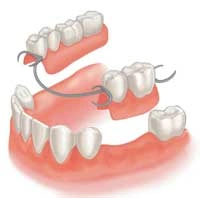
REMOVABLE APPLIANCES OR PARTIAL DENTURES
By the very nature of them having to be removed they have an inherent instability. Although many people tolerated these well the instability can interfere with eating and talking and can cause damage to the remaining teeth and gums. A plastic partial is generally the cheapest and quickest form of tooth replacement and are often made for a temporary measure. Metal partial dentures give greater stability and means less of your mouth needs to be covered with plastic. Both can have teeth added to them in the future.
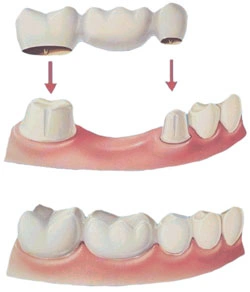
FIXED BRIDGEWORK
The gap is filled by connecting the false tooth to the adjacent tooth or teeth. This means the adjacent teeth may need to have some of their structure removed. The average life span of bridges on average is about 15 years. In some situations a false tooth can be bonded onto the adjacent teeth also the adjacent teeth are not damaged.
LEAVING THE GAP
Teeth do not have to be replaced, obviously for appearances most people replace the visible front teeth. A single missing back tooth is often relatively well tolerated but when two or more back teeth are lost there is a risk of tooth movement and the loss of chewing power become more significant.
DENTAL IMPLANTS
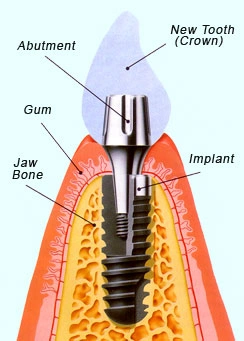
A dental implant is essentially a replacement of the root of a tooth. They are usually made of titanium. Various useful attachments can then be placed on the implant. The attachment may be a crown to achieve a highly cosmetic single tooth replacement. Implants can also be used to support a row of joined or bridged teeth, or they can be fitted with an attachment to help retain a removable denture. The titanium root is usually shaped like a screw. Once it is placed into the jaw bone it fuses with the bone over a period of six months and bond becomes incredibly strong. This is the process termed osseointegration.
Dental implants are a total tooth replacement that can look, feel, and be used to eat like a real tooth. Once successfully placed a person often finds it hard to distinguish between a normal tooth and their implant tooth. They do however cost considerably more than other forms of tooth replacement, a small amount of surgery is required and treatment times are longer than other replacement options. They are self supporting ad so do not damage other teeth. If looked after well they are now considered to be a lifelong prospect. They also help preserve the bone and gum which would otherwise be lost at an extraction site.