Dental Implants & Bone Grafting
Implant Options for Denture Wearers
Save a copy or print this leaflet to read at home.
HOW IMPLANTS WORK
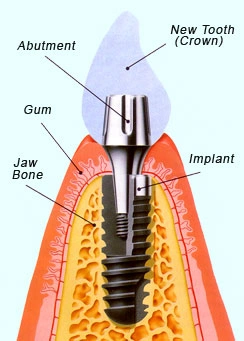
A dental implant is a screw made of titanium that takes the place of a tooth root. Titanium is well accepted by the jaw bone, grows onto the titanium and joins to it very tightly. Various types of connections can be placed on the implant. A tooth crown is often placed for people with teeth. For denture wearers, clip devices like a ball and socket joint can be used to increase the fit and retention of removable dentures. Alternatively, multiple implants can be linked together to provide a complete arch or indeed a complete new set of teeth that do not need to be removed.
THE BENEFITS OF DENTAL IMPLANTS FOR DENTURE WEARERS
Implants can improve dentures in many ways. They can improve the retention and comfort of dentures and can significantly improve the ability to eat. All this means that denture wearers who have implants placed later report increased confidence in social situations and the ability to eat new types of food. Implants also have significant benefits for the health of the jaw bones. Many denture wearers find that long term denture wear shrinks the jaw bone and their dentures become progressively more unstable with time. Implants can stop the loss of jaw bone in the same way that teeth do.
IMPLANTS FOR BONE RETENTION IN THE UPPER JAW
For people who do not require increased retention of their upper teeth but want to retain the bone in their upper jaw, implants can be placed in the jaw bone and the gum allowed to heal over. These implants can also be uncovered at any time in the future and used to support a fixed bridge denture.
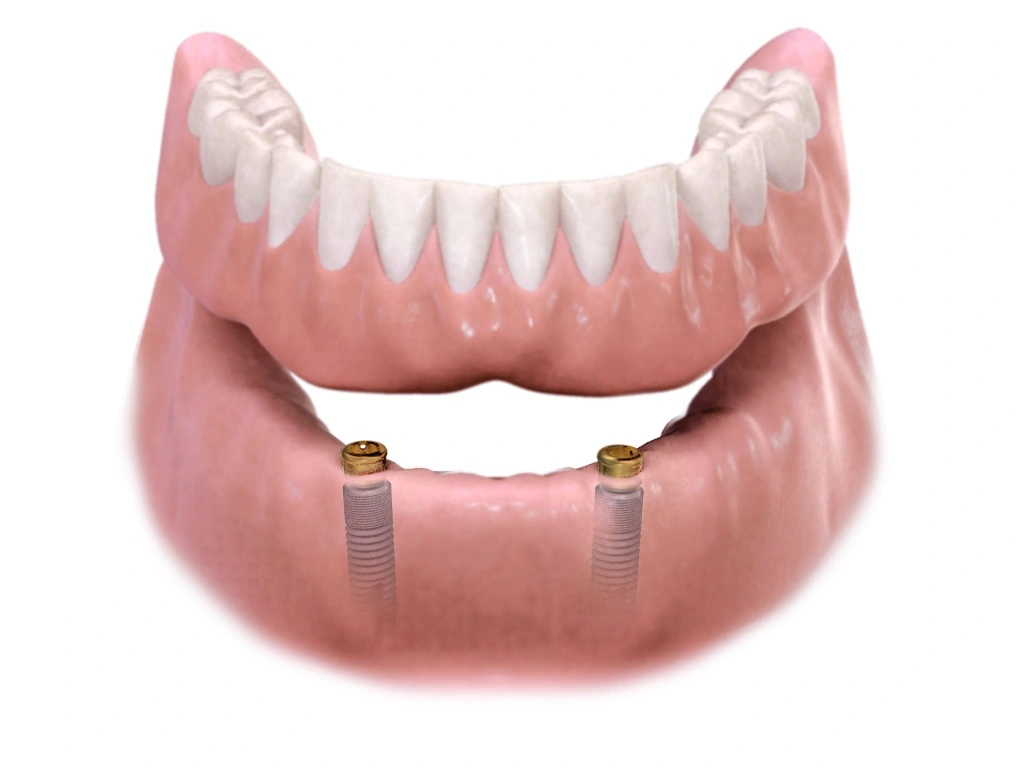
LOWER DENTURE ATTACHMENTS
Lower dentures typically cause denture wearers the most trouble because the denture bearing area is small and the tongue is very mobile. The most cost effective solution to this problem is to place three implants in the lower jaw in the sites where the eye teeth used to be and the centre. A locator abutment is placed on the implant and a retention socket fitted into the denture. The denture is then clicked in and out. The strength of the retention is altered by changing of a rubber ring in the retention socket of the denture.
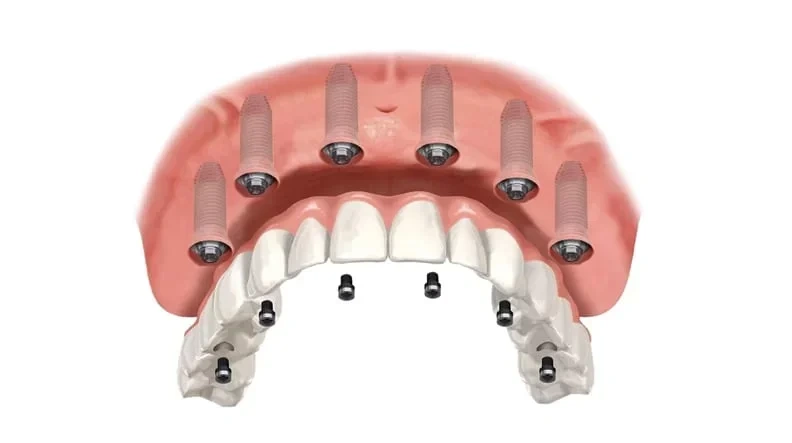
FIXED ARCH TEETH
In the upper jaw, because of the difference in the type of bone, it is best to have a fixed bridge placed. This is done by linking six implants together with a denture that acts like a bridge. These teeth stay in and because they are fixed, greatly enhanced the ability to eat. This suits people wanting a high level of function and who also want to avoid having to take their dentures out at night. Fixed arch teeth can also be placed in the lower jaw.