
Dental Implants & Bone Grafting
Implant Overdentures
Save a copy or print this leaflet to read at home.
A dental implant is essentially a replacement of the root of a tooth. They are usually made of titanium. Various useful attachments can then be placed on the implant. The attachment may be a crown to achieve a highly cosmetic single tooth replacement. Implants can also be used to support a row of joined or bridged teeth, or they can be fitted with an attachment to help retain a removable denture. When an implant is placed into the jaw bone it fuses with the bone over a period of 3-4 months and the bond becomes very strong. This is the process termed osseointegration.
IMPLANTS FOR DENTURE WEARERS
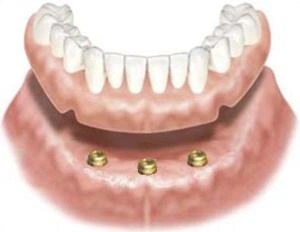
If you have lost all your lower teeth or you are about to, you may consider having implants placed into your lower jaw to retain your lower denture. Most people accept an upper denture which is helped by the stable surface of the roof of the mouth. Lower dentures are often poorly tolerated because there is less fitting surface and the action of the lips and tongue destabilisers the denture. A lower denture can be effectively stabilised by placing three implants into the lower jaw with denture connectors. As well as improving the ability to chew, less food gets under the denture, and confidence with the fit of the denture is increased. Implants help retain the jaw bone around them. They therefore can also be placed in the upper jaw to maintain bone. Implant retained overdentures are a cost effective alternative to a fixed implant bridge to restore your chewing ability.
STAGE I
The first stage of surgery is to extract any remaining lower teeth and place the three implants into the lower jaw bone. There are also options to place only one or two implants however we have found that three implants provides the best result and is not considerably more in price. This surgery is usually completed under intravenous sedation. The implants take a minimum of three to four months to integrate with your own bone.
At this stage you will need to decide if you would like to wear a lower partial denture immediately or if you can tolerate having no teeth for three months and having a delayed denture.
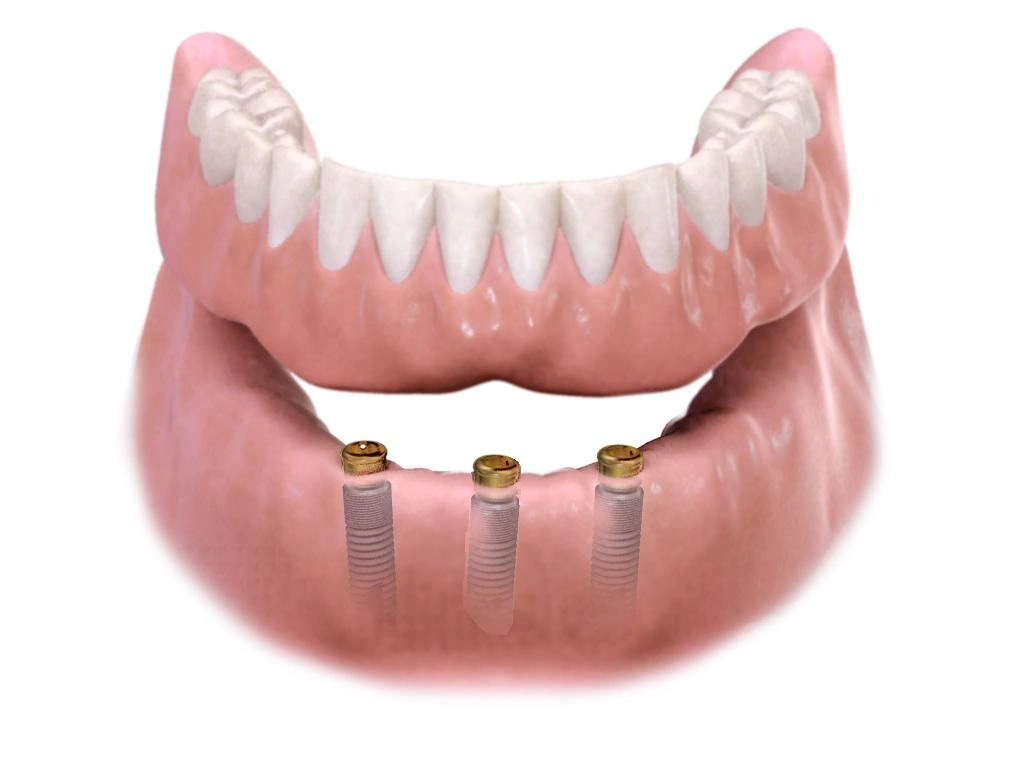
If dentures are inserted immediately following the placement of implants we put flat cover screws on the implants and suture the gum together over the top. Post operatively you will see no evidence of implant placement. If the insertion of dentures is delayed while the implants are integrating with your own bone we place gold coloured abutments onto the implants and the gum is suture together around these. Post operatively you will see these gold studs poking above the gum. Although these don’t decay there is a risk of gum disease so these need to be cleaned well with a toothbrush as teeth do.
The advantage of an immediate denture is the restoration of your smile but you will have more pain and discomfort because of a mobile denture rubbing on surgical wounds. It also means you will require another small surgical operation to have the gold abutments placed onto the implant. This is considerably less invasive than the extractions and implant placement and postoperatively is much kinder.
The advantages of a delayed denture are less pain and suffering over the healing period and no further surgery. However you will be left with no teeth for three to four months.
STAGE II
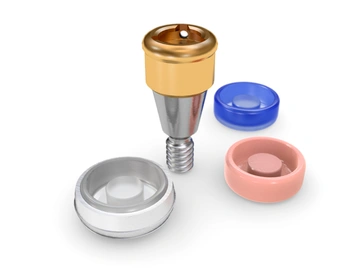
After a minimum of three to four months your implants will be ready to have the denture attached to them. This involves two appointments to see us over one day. You will come in for a morning appointment and we will undergo a small procedure to place the gold abutments (if not completed at the time of implant placement). This involves three small incisions in the mouth to expose the top of the implants and replace the cover screw with the gold abutments. You may have several sutures placed and this is usually undertaken with local anaesthetic only. We will then place a moulding material into the base of the denture to take an impression of the gold abutments. The denture then gets sent to a laboratory for adapting.
When you come back into the clinic in the afternoon for your second appointment the denture is ready to be clicked onto the abutments and the o rings adjusted to provide the best retention for you.
MAINTENANCE
As with teeth these abutments need cleaning well every day. These abutments are at risk of gum disease and calculus build up. Once a year we recommend that you see a dental hygienist to have these professionally cleaned and checked.
Your denture will also need rinsing daily and soaking once a week in a denture solution for 3 minutes.
The o rings will wear out over time due to taking the denture in and out of your mouth or the retention will need increasing.
Occasionally we have had clients needing their gold abutments changed and you can see us for this if you require also.