
Jaw Joint & TMD
TMJ Arthroscopy
Save a copy or print this leaflet to read at home.
Temporomandibular Joint (TMJ) arthroscopy is a minimally invasive surgery that involves introduction of a small camera the Temporomandibular Joint space.
The TMJ is similar to a ball and socket with a soft tissue cushion (called a disc) between the two. This joint is enclosed in a small balloon (synovium) which contains fluid (synovial fluid). This fluid helps lubricate the joint, promote normal movement of the disc, nourish the cartilage surfaces and prevent wear and tear to the surfaces. Problems with the joint can present as: Pain, restricted mouth opening, clicking, locking and crunching. However, not all of these symptoms are due to problems within the joint. In fact, most symptoms are related to the muscles, tendons and fascia that help move the joint.
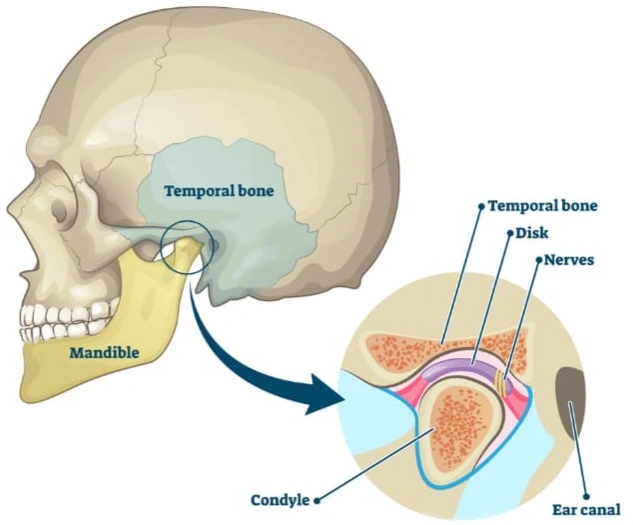
The mechanics of the joint are very susceptible to damage. Causes of damage can include:
- Micro trauma (such as clenching, grinding, posturing your jaw)
- Macro trauma (such as a knock or blow to the jaw)
- Inflammation (such as rheumatoid or other types of arthritis)
- Pathology (such as cysts and tumours)
Although consultation and imaging can provide a good indication of the joint situation, only direct visualisation with a camera can confirm the changes within the joint. Arthroscopy is used when the problem is suspected to arise from within the joint itself (rather than from the muscles, tendons and fascia around the joint) and conservative measures have been inadequate. Arthroscopy is both a diagnostic and therapeutic surgical procedure.
Depending on what is identified during arthroscopy will determine what intervention will be used during the surgery. Interventions include:
- Dilation of the balloon sac (synovium) with fluid to dilute the concentration of inflammation within the joint.
- Division of fibrous scar bands (adhesions)
- Targeted injection of anti-inflammatory medicines in regions with excessive inflammation
- Manipulation of the joint and disc to encourage normal biomechanics
- Heat application to remove overgrown areas of the balloon sac (synovial overgrowth)
With any surgery there are risks involved. Arthroscopy is minimally invasive and consequently has few major risks. These risks can include:
- Pain, bleeding, infection, post-operative nausea and vomiting (this can be significant)
- Weakness to the facial nerve (facial movement) - almost always temporary
- No improvement in joint condition/function
- Entry/perforation into the ear (potentially affecting hearing) (~1%)
- Entry/perforation intracranial (<0.3%)
General Anaesthetic
To facilitate arthroscopy, a general anaesthetic is required. TMJ arthroscopy is a day stay procedure, meaning that you will be able to go home the same day once recovered from your general anaesthetic. You may be contacted by your anaesthetist prior to your surgery for a pre-anaesthetic health assessment of your medical history. The anaesthetist will inform you about your general anaesthetic, risks associated with a general anaesthetic and instructions relating to any regular medications you may take. The anaesthetist will give you specific instructions regarding nil by mouth/fasting requirements.
POST OPERATIVE INSTRUCTIONS
Once you have recovered from the anaesthesia, your nurse will discuss post operative instructions with you and your driver. As the procedure is minimally invasive, you can expect a relatively swift recovery. The following instructions are listed below to ensure a smooth recovery:
- NO DRIVING OR OPERATING HEAVY MACHINERY FOR 24 HOURS FOLLOWING GENERAL ANAESTHESIA - Rest for a few hours immediately following treatment and avoid strenuous exercise. No driving, operating heavy machinery, alcohol, sleeping tablets or making significant decisions for 24 hours after general anaesthetic. Smoking or vaping may delay or complicate healing.
- EXERCISE AND RETURNING TO WORK – Avoid heavy lifting or strenuous exercise for two weeks following surgery. Every person’s recovery is individual. However, you may require one to two weeks away from work. Your surgeon can provide a medical certificate if required.
- EATING AND DRINKING – Following your anaesthetic and recovery, it is important to keep well hydrated with water. After your arthroscopy it is also important to eat soft foods for 4 - 6 weeks, this does not mean pureed food. Examples of soft foods include scrambled eggs, cooked soft potatoes/vegetables, fish, stewed/soft meats and rice or pasta.
- BLEEDING – Some bleeding/ooze from the surgical site is normal following your TMJ arthroscopy. However, if this continues and does not stop, gauze provided upon discharge can be utilized to stop this. Simply roll up the gauze swab provided and place over the wound/incision site and hold firm continuous pressure for at least 20 minutes before looking at the area again. If the bleeding is ongoing, repeat this process once more. If the bleeding continues after the second application of continuous pressure, please contact your surgeon on the phone numbers listed below.
- POST OPERATIVE CARE – Swelling is normal after surgery and can take 5 - 7 days to improve. For 24 hours post procedure, do not shower and leave your dressing on in front of your ear. After 24 hours, you may shower, remove this dressing and continue your usual facial wash routine. After 24 hours you do not need to replace the dressing, leave wound dressing off and apply supplied Chlorsig ointment to the wound two times daily for 10 days.
The Scopoderm patch (usually placed on your neck) reduces nausea. This can be removed 72 hours (3 days) after surgery. If the patch falls off earlier than this, do not be concerned. The patch does not need to be replaced as you have alternative oral anti-nausea medications prescribed for you to take should you need to.
Physiotherapy: Post arthroscopy TMJ physiotherapy is of most importance to optimise your recovery and results. Please make sure you see your physiotherapist 10-14 days after your surgery, you will need to make this appointment.
Bite splint: Wearing your bite splint/night guard every night following your TMJ Arthroscopy procedure is critical to rest your jaw joint, which will provide you pain relief, muscle relaxation and joint stabilisation.
- POST OPERATIVE MEDICATIONS – The following medication regimes will be provided to you on your post operative prescription, please take as per instructions on the dispensed medication box:
- Analgesics (pain relief) – as prescribed by your anaesthetist
- Laxatives as required
- Antibiotic topical Chlorsig ointment
- Anti-emetics (anti-nausea): Post-operative nausea and vomiting is very common following TMJ arthroscopy due to the proximity of the TMJ to the inner ear system. This can feel like severe sea/car sickness due to movement of fluid within the semicircular canals (a series of fluid-filled tubes that have a normal function of regulating balance and sensing head position). In addition to the Scopoderm patch that will be placed on your neck (for the first 72hours/3days), oral anti-nausea medications will be prescribed for you take
- NUMBNESS – You may have numbness and possible temporary paralysis of the face on the side of surgery. This is usually caused by local anaesthetic (numbing medication) administered to your TMJ for comfort after your procedure. As a result, drooping of the eyelid on the arthroscopy side can be a temporary side effect of the local anaesthetic. The local anaesthetic can spread to nearby nerves causing temporary drooping of the eye. This will typically resolve within a few hours. If this is uncomfortable, tape can be used to tape shut the affected eye/s.
Following your surgery a receptionist from Tauranga OMS will contact you to arrange a follow up appointment with your surgeon. If you have not received a follow up appointment within a week, please contact Tauranga OMS to arrange this.
At this appointment the arthroscopic findings and any further treatments/interventions will be discussed. You are welcome to bring a support person to your appointments.
If you have any questions or post operative issues during your recovery. Please contact Tauranga OMS rooms during office hours:
(07) 578 8847
Emergency contact numbers after hours: John Bridgman (021) 767 421 Abi Estelle (021) 429 045 Nabeela Ahmed (029) 0203 4431 Brenton Wilson (020) 4134 3529